
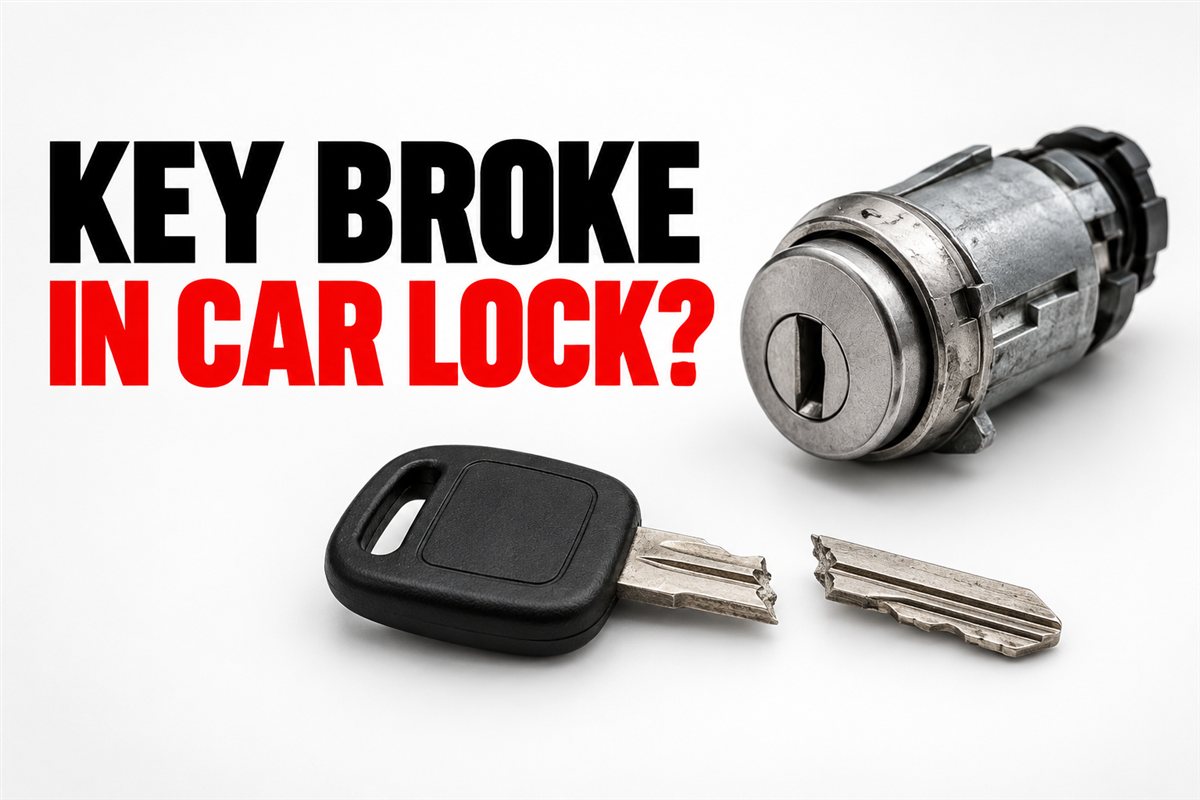
If your key broke in car door lock, stop turning the remaining piece and do not insert another key. Keep the detached part, leave the fragment undisturbed, and arrange an assessment. Removing the fragment, checking the lock, and providing a usable replacement are separate parts of the job.
For a driver in Tucson, the first priority is a safe place to wait and a clear description of the problem. This guide concerns an authorized owner’s mechanical door key; it does not describe methods for opening a vehicle or defeating its security.
Key broke in car door lock: assess access before the repair
Establish whether you are locked outside, whether an authorized remote still operates normally, and whether anyone needs immediate help inside. If a person or animal is in immediate danger, contact emergency services. Do not wait for an ordinary locksmith appointment to resolve a life-threatening situation.
If you already have legitimate access, avoid using the damaged cylinder again. A broken piece can obstruct the keyway even when the rest of the vehicle works. Do not test a spare in the obstructed opening; that can push the fragment farther in or damage another key.
| What you observe | What it tells the provider | What to preserve |
|---|---|---|
| Part of the blade remains in the door lock | Extraction may be needed | The detached key piece and untouched cylinder |
| The key broke after growing hard to turn | Existing wear or lock resistance needs assessment | Your description of earlier symptoms |
| The remote works but the door cylinder is blocked | Entry and mechanical repair are different needs | A reliable authorized entry option |
| No usable spare exists | Replacement-key planning belongs in the visit | Vehicle details and ownership information |
Why extraction does not finish the diagnosis
A key can break because its blade was damaged or worn, but resistance in the lock can also contribute. The fact that the fragment comes out does not establish that the cylinder is ready for normal use. Explain whether the lock had been stiff, whether the key was bent, and whether an earlier attempt involved extra force.
Tucson Locksmith Experts LLC lists broken key extraction, key replacement, and other work on its automotive locksmith page. Confirm support for the vehicle year, make, model, and key type. Do not treat a general service listing as a guarantee that every product or vehicle can be repaired at the location.
Ask what will be checked after the extraction and what findings would support cylinder repair or replacement. If replacement is proposed, discuss how the new arrangement affects the existing keys. One repaired door should not leave you confused about which key operates which function.
Avoid improvised removal attempts
Do not put glue, screws, hooks, or another key into the cylinder. Avoid gripping a short fragment with excessive force or turning it with pliers. Keep unapproved sprays out of the lock. A visible piece is not a reason to pull or twist without understanding what is binding.
Preserve the detached key head and blade section even if they look unusable. They can help the provider understand the key type and the break. Do not assume the broken sections can simply be joined into a dependable key or that copying damaged material is the best replacement approach.
AAA’s car-lockout service information distinguishes entry assistance from work such as broken-key extraction. That distinction is useful when arranging help: say you have a broken key in a cylinder, rather than requesting a generic unlock and expecting mechanical repair to be included.
Prepare a complete service request
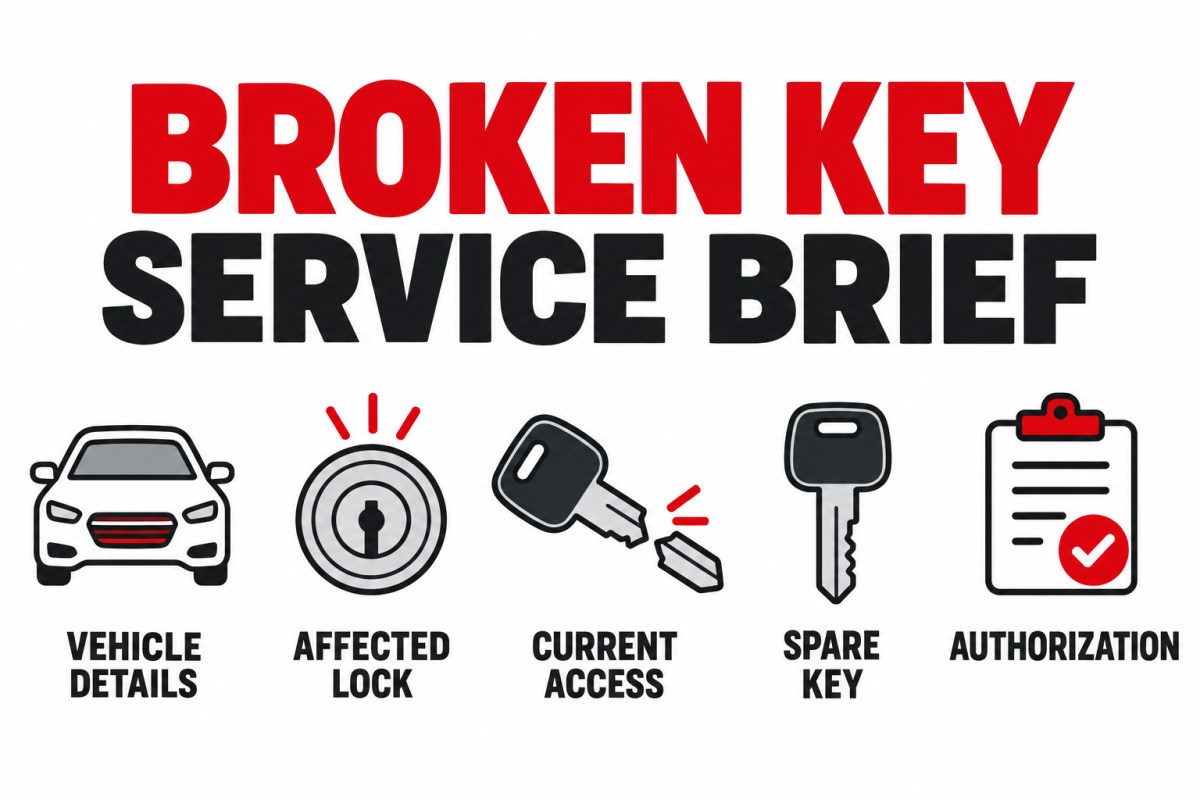
- Give the vehicle year, make, model, and current location.
- Identify the affected door and whether any key remains inside its lock.
- Explain whether you can access the vehicle through an authorized method.
- Say whether a usable spare exists and whether it starts the vehicle.
- Report previous stiffness, damage, or attempted removal.
Ask which ownership or authorization documents are needed and how they will be verified. Confirm the proposed inspection, extraction, replacement-key needs, estimate approval, and any parts or programming limitations. Use the company’s contact page to agree on the actual request before a visit.
Plan the key and lock test afterward
Illustrative example, not a company service record: A driver has a working remote but breaks the backup blade in the door. The request should cover the obstructed mechanical lock and whether a new blade is required; it should not assume a complete electronic remote must be replaced. The technician’s inspection determines the appropriate scope.
At handover, test only the agreed functions with the appropriate authorized keys. Ask about remaining stiffness and keep the service record. If electronic-key work is also recommended, the existing key fob programming article covers that separate service topic. The service overview can help you describe related needs without confusing entry assistance and repair.
Keep entry, extraction, and replacement separate
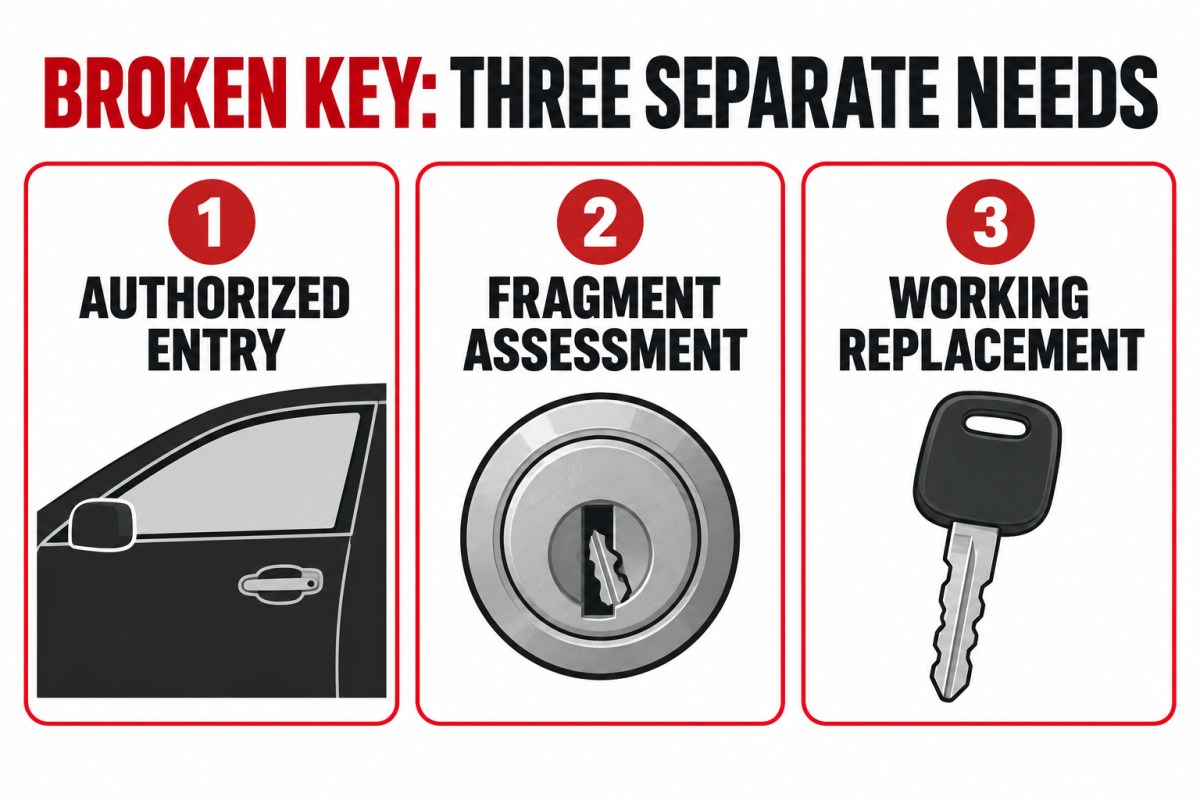
A complete service request identifies the result you need rather than naming one repair in advance. Authorized entry may be necessary if you cannot access the car. Fragment assessment concerns the material remaining in the cylinder. A replacement concerns the key you will use afterward. Those needs can overlap, but one completed task does not automatically establish that the others have been addressed.
Tell the provider which of those outcomes matters at the present location. A driver with a working remote may already have access but still needs the mechanical backup assessed. Another driver may need entry before any ordinary inspection can proceed. Describe the difference before comparing estimates, so the appointment is not booked as a simple unlock when a broken-key problem also needs attention.
Record the condition before more attempts
Write down the affected door, the key used, and whether resistance existed before the break. Keep the detached piece where it will not be lost. Report attempted removal or any product already applied without trying to undo it yourself. A factual history gives the technician a clearer starting point than a list of explanations found online.
Do not repeat an action simply to obtain a photograph or demonstrate the problem to another person. If the fragment is visible, its visibility does not establish that it can be removed by pulling. Ask what information the provider needs and collect only what can be observed safely without touching the obstructed opening.
Compare estimates on the same outcome
An estimate for entry assistance is different from one for assessment, extraction, and a working replacement. Ask which services are included, what remains uncertain, and how additional work will be approved. This lets you compare proposals without assuming every quoted figure describes the same result or includes the same parts.
Explain whether you have a reliable spare and whether it has started the vehicle before. A newly purchased blade or untested copy is not the same reference as a proven key. If replacement equipment is recommended, ask the provider to distinguish the metal blade, remote functions, and any electronic starting authorization that applies to the proposed work.
| Service decision | Question to clarify | Useful confirmation |
|---|---|---|
| Entry | Is access assistance needed and included? | How an authorized person will meet the provider |
| Fragment assessment | What condition needs inspection? | The affected cylinder and reported history |
| Replacement key | What functions will the new key support? | Cutting and any electronic work stated separately |
| Completion | What operations will be demonstrated? | The agreed tests and remaining limitations |
Ask before buying a replacement part
A part listed for a vehicle family may leave unanswered questions about the exact installation. Discuss the inspection and product compatibility with the person performing the work before purchasing a cylinder or key. Ask whether customer-supplied parts are accepted and what happens if they do not suit the vehicle or the diagnosed condition.
Keep that purchase decision connected to the actual symptom. Replacing a key without assessing earlier resistance can leave an underlying complaint unresolved. Replacing a cylinder without discussing its key arrangement can leave the owner uncertain about which key operates which door. Both questions belong in the estimate before parts are approved.
Three situations that need different descriptions
1. A working remote with a broken mechanical backup
The vehicle may remain accessible through its normal authorized remote while the door cylinder is obstructed. Explain that access currently works and identify the mechanical function that needs attention. Do not assume the whole remote must be replaced solely because its blade broke. Product design and the agreed inspection determine what equipment is needed.
2. No usable spare and no current access
This request can involve more than one immediate outcome. Tell the provider that entry and replacement-key planning are both relevant. Ask what vehicle details and ownership verification are required. Requirements vary, so establish the actual process rather than assuming the same document list or appointment arrangement applies in every circumstance.
3. Earlier resistance followed by a break
Report the earlier resistance even if removal appears to be the most urgent task. The cylinder and key condition deserve assessment before you rely on a replacement. Do not present the new blade as the entire solution until the intended lock function is checked. A clear history helps the provider explain why further inspection may be necessary.
Keep a practical record of the completed work
Ask what was inspected, what changed, and what was tested. The record should identify the affected function in plain language. A note describing restored mechanical door-key operation is more useful than an unexplained statement that access was obtained. If another condition remains outside the scope, have that limitation identified for follow-up.
Test the agreed functions through normal authorized operation when circumstances allow. Confirm which key is being tested and which door it is intended to operate. Ask about any remaining resistance or unusual behavior rather than accepting repeated force as a normal technique. An operation that succeeds once is not an explanation of an unresolved intermittent complaint.
If the problem recurs, use the service record to report the affected opening and the behavior observed. Avoid adding new removal attempts or changing unrelated components before discussing the recurrence. A precise account helps the next assessment distinguish the original issue from a separate condition introduced later.
Finally, store the working spare separately through an arrangement appropriate for your vehicle and household. Keep personal identification out of public messages, and retain product and service information where an authorized owner can find it. The aim is dependable authorized operation and a useful repair history, not simply a fragment removed without a clear handover.
Keep the door-lock complaint visible in the final decision
A car door lock can remain an outstanding repair item even if the driver has another way inside. Ask the provider to explain that distinction in the completion record. If only access assistance was arranged, do not describe the car door lock as repaired afterward. If the mechanical function was included, confirm the ordinary operation demonstrated and any limitation that remains.
Keep the record useful for another authorized driver. Explain which key is intended for the affected car door lock and whether a replacement arrangement differs from the other openings. Do not distribute an untested copy as the new spare or assume an old key is still suitable after parts have changed. A clear handover helps prevent the next person from forcing the wrong blade into the wrong cylinder.
When arranging follow-up, identify the original service and describe the present car door lock behavior without repeating improvised attempts. This gives the provider a factual starting point and keeps the discussion focused on the function you need restored.
Frequently Asked Questions
Can a locksmith remove a broken key without replacing the lock?Sometimes, but the lock condition and the way the fragment is lodged matter. Extraction and repair should be discussed separately. Ask what inspection will follow removal and what would justify replacing the cylinder. No online description can promise a particular result or guarantee that the surrounding hardware is undamaged. |
Should I insert the spare behind the broken piece?No. Keep the spare out of the obstructed cylinder. Another key can push the fragment farther inside or damage an otherwise usable blade. Tell the provider that you have a spare and whether it is known to work, but preserve it for testing only after the obstruction has been addressed. |
Does a working remote mean I can ignore the broken door key?A remote may preserve normal access while the mechanical backup remains unusable. Arrange assessment of the blocked cylinder instead of assuming the backup no longer matters. Ask how the repaired lock and replacement blade will be tested, and confirm which functions remain available until the work is completed. |
Can I glue the two pieces together?Do not put glued pieces into a lock. Adhesive and an unstable join can complicate removal and leave more material inside. Keep both pieces separately for the technician to inspect. The provider can explain the appropriate replacement method for that key rather than relying on a repaired blade. |
Will a new blade also need electronic programming?That depends on the key design and the replacement scope. A metal blade, remote-control functions, and starting authorization are not always the same component. Explain what is broken and what still works. Ask the provider to separate cutting, electronic compatibility, and programming in the proposed work. |
What if the key was difficult to turn before it broke?Report that history before authorizing a replacement key. Resistance may have contributed to the break and deserves assessment along with the blade. A new key forced into an unresolved problem can fail too. Describe when the stiffness started and whether it affected just that door or other functions. |
Should I call roadside assistance before booking a locksmith?Check your existing plan if you have one and ask what it covers for a broken key inside a lock. Entry assistance, extraction, replacement keys, and towing may have different terms. Confirm authorization and reimbursement requirements directly with the plan rather than assuming every locksmith charge will be included. |
Can this be handled for any car model?Service depends on the vehicle, equipment, parts, and the provider. Give the exact vehicle details before booking and explain whether the cylinder is damaged or just obstructed. Ask whether work can be performed at the vehicle location and what circumstances might require a different specialist or arrangement. |
What if my documents are locked inside the car?Tell the provider before the appointment and ask how ownership or authorization can be verified in that situation. Requirements vary, so do not assume one universal document list applies. Keep personal documents private and follow the agreed verification process rather than sending them through an unverified contact channel. |
What should I keep after the repair?Retain the service record, replacement-key information, and any instructions supplied for the affected lock. Confirm what was repaired and which existing keys remain valid. Report recurring resistance promptly and avoid resuming forceful operation. Store any new spare separately through an arrangement appropriate for your household and vehicle. |
Final Thoughts
When a key broke in car door lock, preserve both the remaining fragment and your usable keys. Arrange the right combination of extraction, lock inspection, and replacement rather than assuming an unlock alone completes the work.
Call Tucson Locksmith Experts LLC at (520) 595-5533 or contact the team to confirm the service scope, product support, and current availability.