
If your deadbolt spins freely but the bolt does not move, do not assume the door is secure. Identify which part turns, maintain safe access, and arrange an assessment of the lock. Some exterior controls have model-specific behavior, so compare the symptom with the correct product instructions before calling it a failure.
A key rotating in a cylinder, an interior thumbturn moving, and a loose exterior housing are different observations. This guide helps Tucson homeowners report those distinctions without dismantling a lock or attempting entry through a failed mechanism.
Deadbolt spins freely: name the part that moves
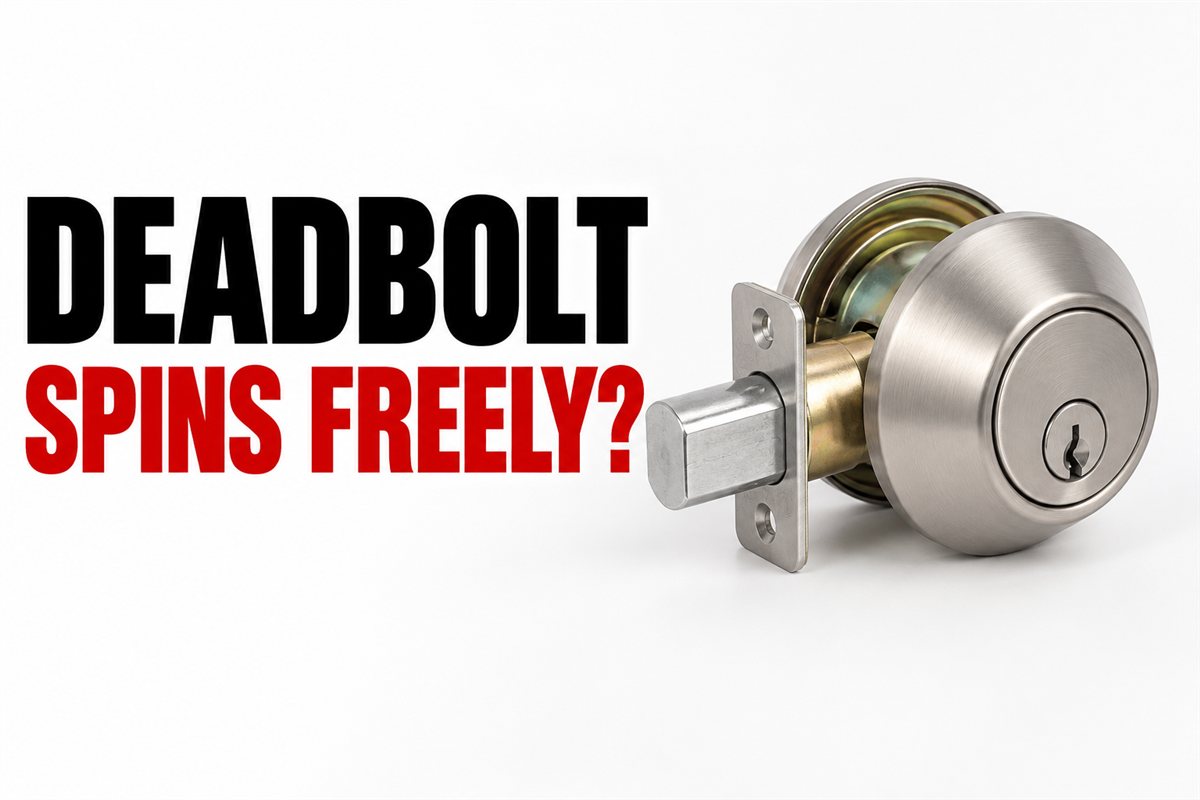
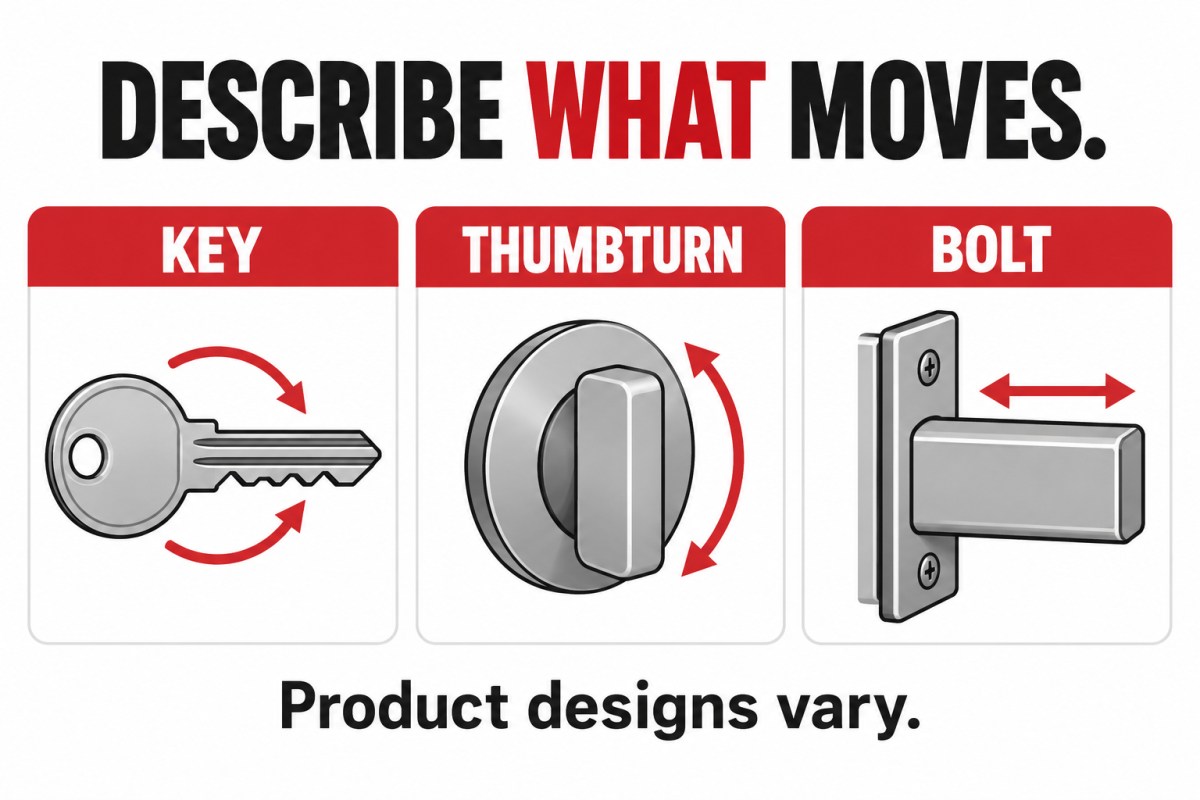
The thumbturn is the control usually operated from inside. The cylinder accepts a key on keyed models. The bolt is the part that extends from the door edge into the frame. The outer trim surrounds the mechanism. Tell the service provider which of these moves and whether the bolt responds.
A control that turns without moving the bolt can require a different assessment from a whole lock housing that shifts against the door. Do not tighten random fasteners, force rotation beyond its usual travel, or remove the assembly while relying on that door for security.
| Observation | Useful distinction | What to report |
|---|---|---|
| Key rotates but bolt remains still | Keyed operation is not moving the bolt as expected | Whether the interior thumbturn still works |
| Interior thumbturn turns without bolt movement | The interior operation needs inspection | Whether the symptom began after installation or normal use |
| Entire housing moves against the door | Mounting or assembly condition may contribute | Any visible looseness without taking it apart |
| Exterior control behaves differently on a keypad model | Product design must be identified first | Exact model and behavior after normal authorized operation |
Keep access and security separate
If the door is open and safe to keep open, observe ordinary operation without closing yourself outside. Do not repeatedly test an unreliable deadbolt as your only means of entry. If the bolt is already extended in a closed door, avoid forceful turning and tell the provider that access itself may be affected.
A door can look shut while its deadbolt has not engaged. Conversely, a rotating control does not establish that the bolt has retracted. Verify the actual intended function through normal operation rather than relying on the position of a decorative knob. If you cannot secure an entrance, explain that priority when arranging service.
Do not install improvised restraints that could obstruct occupants leaving the home. Keep a usable exit route available. For managed or rental property, coordinate with the responsible owner or manager before authorizing a hardware change.
Why the model and recent history matter
Lock designs differ. A symptom following a new installation or recent adjustment raises different questions from a long-used lock that suddenly changes. Provide the brand and model from visible information, if available, and report recent door work. A photograph of the intact assembly may help if the provider requests one.
Schlage’s deadbolt installation overview illustrates why assembly and door preparation belong in the diagnosis. Its product support resources can help locate instructions for a specific model. Neither resource establishes what has failed in an unidentified lock.
Spinning is different from resistance
If a bolt moves normally with the door open but resists only when the door closes, describe that pattern separately. Door and strike alignment may need attention. The central issue here is movement without the expected bolt response; avoid treating every difficult lock as the same problem.
Tucson Locksmith Experts LLC describes installation and replacement on its residential locksmith service page. Confirm whether inspection or repair of your existing deadbolt is available, and ask how the recommendation addresses the observed failure rather than simply changing the finish or key.
Questions before approving replacement hardware
- What observation supports repair or replacement?
- Will the proposed hardware fit the existing door preparation?
- Does the door or frame need attention as part of the work?
- What will happen to the existing keys and household access plan?
- Which normal operations will be tested before the visit ends?
Ask for the estimate and approval process before work begins. If someone proposes rekeying, clarify the difference: changing key access does not by itself repair a mechanical connection that fails to move the bolt. The site’s house cylinder rekey article addresses key access, which is a separate decision from the symptom discussed here.
An example of a useful inspection request
Illustrative example, not a reported company job: A homeowner says the inside thumbturn rotates farther than usual and the bolt does not extend even with the door open. That description directs attention to lock operation rather than immediately blaming the strike plate. A qualified inspection is still needed to identify the part and suitable remedy.
Use the locksmith service overview to describe related needs, and contact the team with the product details. Keep the service record and confirm that the agreed lock and key functions work before relying on the door again.
A worksheet when a deadbolt spins freely
Describe one ordinary operation from beginning to end. Identify which side of the door you are using, which control moves, and whether the bolt moves with it. Record whether the door is open or closed during that observation. This separates visible behavior from a conclusion about the internal mechanism and gives the provider a more useful starting point than the general phrase broken lock.
If a deadbolt spins freely, note whether the behavior is new or has been present since installation. Include known recent work on the lock, door, or frame. Do not assume that the most recent change caused the symptom, but make that history available. A technician can consider it alongside the actual product and condition rather than relying on a diagnosis made before inspection.
Compare controls without taking anything apart
An interior thumbturn, a keyed cylinder, and an exterior keypad control are not interchangeable descriptions. Tell the provider which one you mean and how the other ordinary controls behave, if you already know. Do not dismantle the lock to collect more detail or repeatedly operate an unreliable mechanism as your only way to get back inside.
Keep the expected product behavior in view. Some designs differ from a conventional mechanical deadbolt, so the exact model matters. Use the correct user instructions to describe normal operation. Avoid treating a video of a different model as a test procedure or assuming that every exterior control must behave in the same way when it is not actively operating the bolt.
Separate the repair decision from the access decision
If a deadbolt spins freely while the door remains open, the immediate issue may be the ability to secure the entrance. If the door is closed with the bolt extended, authorized access may also need attention. State both needs in the request so an appointment intended only to restore entry is not mistaken for a complete mechanical repair.
Discuss any interim arrangement with the responsible owner or manager. Do not add an improvised restraint that could interfere with occupants leaving. If the entrance cannot be secured normally, tell the provider that clearly and confirm the available service options directly. A general online service description does not establish an arrival time or the method appropriate to an individual opening.
| Decision | Question to ask | What to keep in the record |
|---|---|---|
| Assessment | Which operation is being evaluated? | The control, bolt response, and door position |
| Repair or replacement | What finding supports the recommendation? | The proposed work and its limits |
| Key access | Which existing keys will remain usable? | The completed key arrangement |
| Handover | What normal functions will be tested? | The demonstrated result and unresolved items |
Ask how the proposed hardware fits the door
A replacement should be selected for the actual door and intended function. Ask what information establishes fit and whether other door conditions require attention. Appearance alone does not establish compatibility. A lock that looks similar in a catalogue may leave unanswered questions about its preparation, installation, key arrangement, or intended use.
When a deadbolt spins freely, a new key or a change in key access should not be assumed to repair every mechanical fault. Have the provider explain the different purposes of key-related work and hardware work. You can choose both where appropriate, but the estimate should identify what each item is intended to achieve instead of presenting them as interchangeable terms.
Clarify customer-supplied parts before purchase
Ask whether the provider accepts parts you purchase and who checks suitability before the appointment. Do not buy a component merely because an online description resembles the symptom. The inspection may identify a different issue or a door condition that changes the best choice. Connect the purchase to the actual opening and recommendation.
For a rental or managed property, establish who approves the product and receives any new keys. Coordinate that decision before work begins rather than asking the technician to resolve conflicting instructions on site. Keep the approved scope with the property record so a future occupant or manager can understand which hardware was installed and why.
Three comparisons that help explain the complaint
1. The key moves but the interior control works
Report that comparison if it is already known through normal safe operation. It directs attention to a difference between controls without proving which internal component is responsible. Do not force the key to obtain another example. A useful request states what still operates and what no longer produces the expected bolt response.
2. The thumbturn moves but the bolt does not
If a deadbolt spins freely from inside, explain whether the bolt remains in the same position with the door open. That detail differs from a bolt that moves but meets resistance only at the frame. Preserve safe access and let the provider assess the assembly rather than tightening or removing components to test a theory.
3. The outer housing moves against the door
Visible movement of the entire housing is different from rotation of its normal user control. Describe the part that shifts and any recent installation work. Do not continue loosening or tightening fasteners to make the symptom easier to demonstrate. The current mounting and ordinary operation should be assessed together using the correct product guidance.
Make the final test match the original request
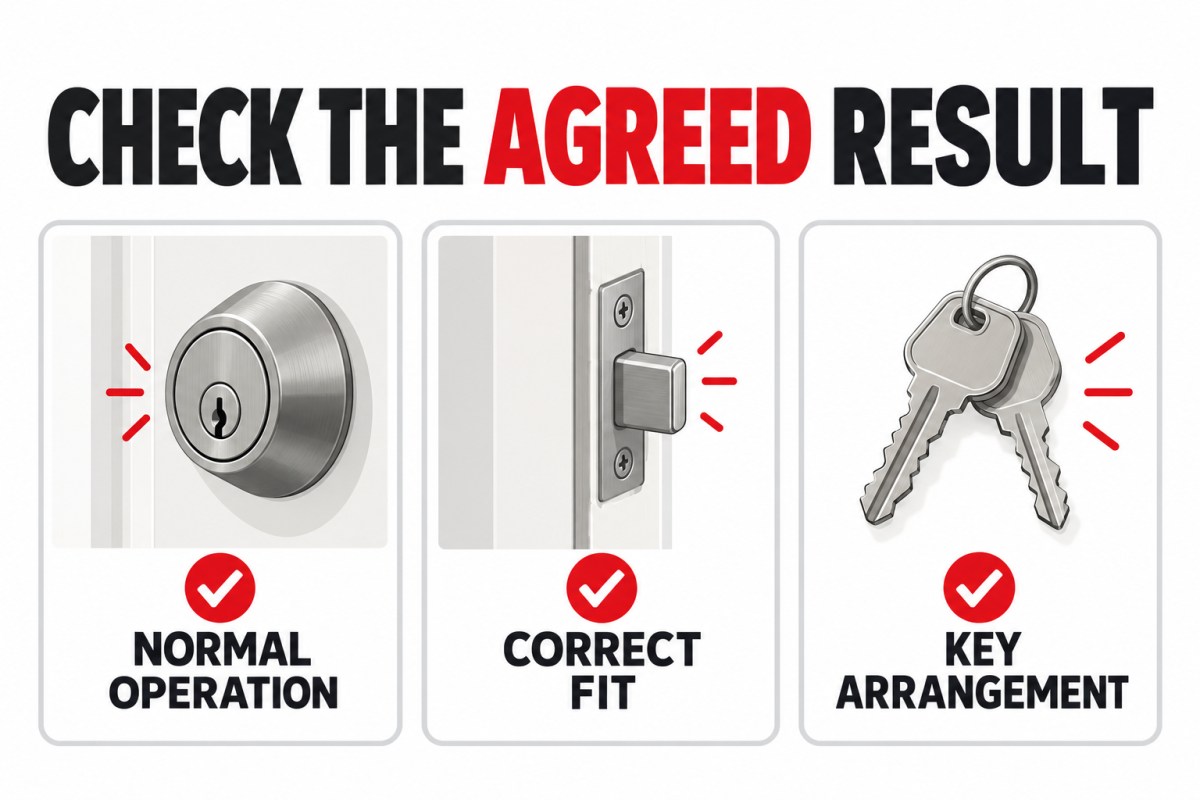
Ask the provider to explain what was inspected, repaired, replaced, or retained. Test the agreed normal functions while preserving access, when circumstances allow. Confirm the key intended for the completed arrangement and ask about any remaining resistance or unusual movement. A single successful operation is not an explanation of an unresolved intermittent complaint.
If a deadbolt spins freely again after work, refer to the service record and describe the same control and bolt behavior. Avoid changing unrelated parts before discussing the recurrence. A clear record helps distinguish a repeated condition from another door issue and gives the next assessment a factual starting point.
Retain the product information and any appropriate user instructions. Keep old and current keys clearly separated after an authorized access change. Tell other authorized occupants which keys remain valid and whether any follow-up is required. The handover should leave the household understanding the completed function rather than relying on an unexplained workaround.
Frequently Asked Questions
If a deadbolt spins freely, is the whole lock broken?No. It is a symptom that needs to be described accurately and inspected. Explain whether the key, thumbturn, or whole housing moves and whether the bolt responds. The result can depend on the lock design and condition. Avoid ordering a complete replacement solely from the word spinning. |
Can a keypad lock have an exterior control that turns normally?Some products have model-specific exterior behavior, so identify the lock and check the correct instructions. Do not compare it only with a conventional keyed deadbolt. Report what happens after ordinary authorized operation and whether the bolt moves, without attempting to defeat the lock or change hidden components. |
Should I close the door to test a deadbolt that spins freely?Preserve safe access while checking ordinary operation. If you are already inside and can keep the door open safely, begin there rather than locking yourself outside with an unreliable mechanism. Do not make repeated tests your substitute for an inspection when the bolt does not respond as expected. |
Is rekeying the solution to a freely rotating thumbturn?Rekeying changes which key operates a compatible cylinder; it does not automatically repair every mechanical fault in a deadbolt. Ask the provider to explain the recommended work in relation to the actual symptom. You may have separate access-control and hardware needs, and those should be identified separately. |
What if only the outside key fails to move the bolt?Tell the technician that interior operation still works, if you have verified that through ordinary safe use. That comparison is useful but does not establish the failed component. Do not force the key or rely on the exterior function until the cause is assessed and the agreed repair is tested. |
Is recent installation relevant when a deadbolt spins freely?Yes. Share when the lock was installed and whether the problem began immediately or later. Door preparation, assembly, and product compatibility may need review along with the hardware condition. Keep installation details or packaging available, but do not disassemble the lock to collect information before speaking with the provider. |
Can I just tighten all visible screws?Avoid random adjustments on an unreliable assembly. Overtightening or moving the wrong component can affect operation and obscure the original symptom. Report visible looseness and the exact model if known. Ask a suitable professional to assess mounting and lock function together using the correct product guidance. |
What if the door cannot be secured tonight?Tell the provider that the entrance cannot currently be secured and confirm available options and timing directly. Coordinate with the property manager or responsible occupant as appropriate. Do not assume an online service page guarantees immediate attendance, and avoid improvised changes that could interfere with occupants leaving safely. |
Will a replacement deadbolt accept my current house key?That depends on the selected hardware and the current key arrangement. Discuss this before purchasing a replacement or approving installation. Ask which existing keys will remain valid, what new keys will be supplied, and whether the proposed arrangement is compatible with the other doors you want to operate. |
What should be checked after the work?Confirm the agreed bolt movement, interior operation, and authorized exterior operation while maintaining access. The door should close and lock without unusual force. Ask about any unresolved door or frame issue and retain the service record, product details, and instructions needed to use the completed installation correctly. |
Final Thoughts
If a deadbolt spins freely without moving the bolt as intended, confirm the actual lock function before relying on it. Clear observations and a model-specific assessment help distinguish a repair need from normal product behavior.
Call Tucson Locksmith Experts LLC at (520) 595-5533 or contact the team to confirm the service scope, product support, and current availability.