
A key stuck in ignition should not be pulled with tools or forced beyond its normal position. Secure the parked vehicle, follow its own manual for shutdown and key removal, and stop if ordinary operation does not release it. A retained key and a key that will not turn are different symptoms.
This checklist helps Tucson drivers explain a conventional keyed-ignition problem before requesting service. It does not provide procedures for bypassing an interlock, opening a steering column, or disabling vehicle security equipment.
Key stuck in ignition: identify the position and behavior
First describe whether the engine is running or off, whether the key rotates normally, and where rotation stops. Do not use the word stuck to cover every starting issue. A key that starts the engine but will not withdraw after parking needs a different explanation from one that never rotates.
Secure the vehicle using the instructions in its owner manual. Some vehicles connect key removal to the transmission or selector position; others use different arrangements. Confirm the ordinary parked position and shutdown sequence for your specific model without forcing the selector or accessing a release mechanism.
| Observation | Why it matters | What to tell the provider |
|---|---|---|
| Key rotates normally but will not withdraw | Retention differs from failure to turn | Exact key position and shutdown behavior |
| Key stops before its usual removal position | Normal shutdown sequence is incomplete or obstructed | Transmission indication and recent symptoms |
| Blade or key head is visibly damaged | Force could cause a break | Damage noticed before or during the problem |
| Key has broken inside the ignition | Extraction and inspection may be needed | Which part remains and whether any loose piece is retained |
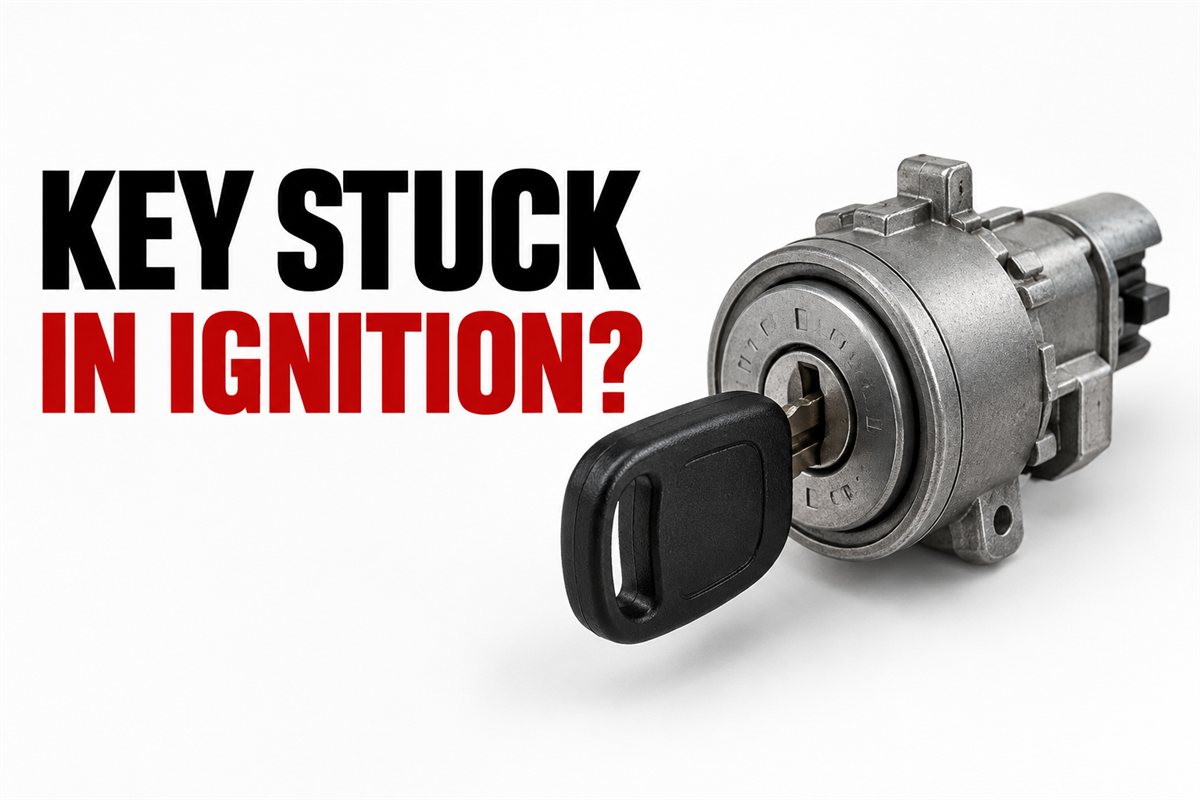
Use the correct owner manual, not a universal trick
Vehicle-specific instructions matter. For example, a historical Ford owner guide describes a key-removal sequence tied to Park for that vehicle. It is an example of why the correct model instructions matter, not a procedure that applies to every car or transmission.
If the ordinary sequence does not work, do not keep cycling the key or selector aggressively. Note warning messages and any recent difficulty shifting or turning the key. Avoid testing online release shortcuts intended for a different model. A key-removal problem can require coordination with a vehicle service specialist rather than a cylinder replacement alone.
Why force can make the visit more complicated
Pulling the key with pliers, bending the head, or striking the ignition can damage parts and create a broken-key problem. Do not dismantle the steering-column covers or insert tools into openings around the ignition. Leave unapproved sprays and adhesives out of the assembly.
Tucson Locksmith Experts LLC lists ignition repair and broken key extraction on its automotive locksmith service page. Explain that the key is retained and whether it still turns. Confirm support for the vehicle and ask what aspects of the problem the provider can assess.
If the key releases before the appointment
Tell the provider what happened and whether release required unusual pressure or repeated attempts. A single successful removal does not establish that the cause is gone. Preserve the key and discuss whether assessment is still appropriate before depending on the vehicle for another trip.
If another authorized driver needs to use the car, communicate the unresolved symptom. Do not pass along a forceful workaround as normal operation. A clear history is more useful than repeated attempts that change the condition before inspection.
Prepare a service call that distinguishes the needs
- Vehicle year, make, model, and transmission type if known.
- Whether the engine is running and whether the key can rotate.
- The displayed transmission position and any warning messages.
- Visible key damage, prior ignition work, or earlier retention symptoms.
- The location, access conditions, and whether you can wait safely.
Confirm ownership or authorization requirements, diagnostic scope, estimate approval, and product support. Ask whether the provider can assess the symptom at the vehicle location and what findings might require a different repair facility. The contact page provides the business contact route for those questions.
Separate removal, repair, and replacement-key work
Releasing a retained key, fixing the cause, and creating another key are separate outcomes. Ask which are included in the estimate and what will be tested. If a replacement cylinder or key is proposed, discuss existing-key compatibility and any electronic authorization requirements before approving parts.
The existing new key fob creation article concerns replacement equipment. It should not substitute for diagnosing a mechanically retained key. The service overview can help you identify related work without treating every ignition symptom as a request for a complete new remote.
An example of a useful symptom report
Illustrative example, not a company service record: A driver parks, shuts off the engine, and finds the key turns but stops before its usual withdrawal position. The request should include that sequence, the displayed gear position, and any earlier shifting issue. It should not claim a worn cylinder is the proven cause before inspection.
At handover, ask for a test of the agreed starting, shutdown, and removal functions. Keep the service record and report any remaining intermittent retention. Information about Tucson Locksmith Experts LLC helps identify the company, but vehicle-specific coverage and appointment availability still need direct confirmation.
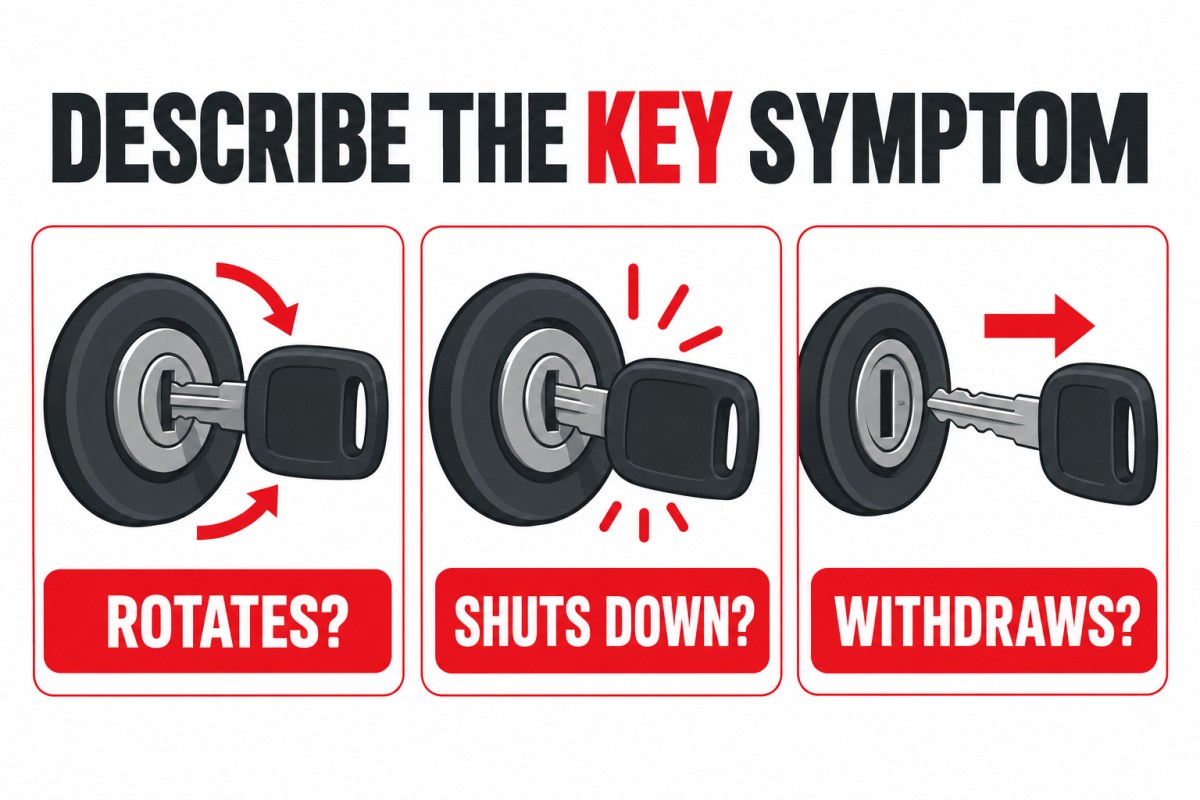
A precise report of a key stuck in ignition
Describe one ordinary attempt rather than repeating the operation to gather more examples. Record whether the engine was running or off, whether the key rotated, and whether it reached the position normally used for removal. Keep these facts separate from the cause you suspect. The service provider needs the observed sequence before recommending a particular component.
A key stuck in ignition can describe several different experiences in everyday conversation. One driver may mean the blade cannot rotate at all, while another means it turns normally but cannot be withdrawn after parking. That distinction belongs in the first sentence of the service request. It helps avoid arranging the wrong assessment based on an ambiguous description.
Use the established normal operation as the reference
The correct owner manual describes normal operation for the vehicle and its equipment. Check that reference instead of using a procedure for a similar-looking car. If the usual documented sequence does not work, preserve the condition and ask for advice specific to the actual vehicle. Do not force a control or search for an undocumented release point.
Note whether the behavior is new or has happened before. If someone has been using an unusual action to obtain removal, report it as an unresolved symptom rather than a normal operating method. A precise history can help the provider understand why a key that releases once may still require assessment before another trip.
Separate the requested service outcomes
Assessment, ordinary key release, repair of the underlying cause, and replacement-key work are different outcomes. Ask which are included in the appointment and what might require another vehicle specialist. A visit that resolves immediate retention does not automatically establish that every starting, shutdown, or key-related function has been repaired.
When arranging help for a key stuck in ignition, explain the present location and whether you can wait safely. Confirm the authority-verification process, the estimate approval process, and product support before a visit. Avoid relying on a broad online service list as a guarantee of support for every vehicle or of a particular result at the location.
| Outcome | Question before approval | What to record |
|---|---|---|
| Assessment | Which reported functions will be evaluated? | The symptom sequence and vehicle details |
| Immediate key retention | What is included in the initial service scope? | The agreed outcome and limitations |
| Further repair | How will findings and additional work be approved? | The recommendation and authorization |
| Completion | Which normal-use functions will be demonstrated? | The result and any follow-up |
Ask about replacement implications before parts are approved
If the recommendation includes a cylinder or key, ask how it relates to the original symptom and which existing keys remain usable. Discuss cutting and electronic authorization separately where those are relevant to the proposed work. A mechanical complaint should not automatically become an order for a complete remote without an explanation of why that equipment is needed.
Do not purchase parts solely from the phrase key stuck in ignition. Compatibility and the actual finding matter. Ask whether customer-supplied parts are accepted and who confirms suitability. Keeping the purchase connected to the assessment reduces the chance of approving equipment that does not address the reported function.
Four comparisons that improve the service brief
1. Rotation is normal but withdrawal is not
State that the key turns normally and identify when removal fails. Describe the established shutdown sequence and any message already observed through normal use. Do not call this a key that will not turn if rotation is not the problem. A clear distinction helps the provider select an appropriate assessment rather than infer the symptom from a broad label.
2. The key stops before its usual removal position
Report where ordinary movement ends without adding force to complete it. Include the displayed transmission information if it is already visible, but do not assume that display proves the condition of another component. The vehicle-specific arrangement and inspection determine what needs attention. Avoid using procedures intended for a different transmission or model.
3. Removal succeeds after repeated attempts
A successful withdrawal can be useful information without establishing that the cause is gone. If a key stuck in ignition releases before the visit, tell the provider exactly what happened and discuss whether assessment should still proceed. Do not encourage another driver to repeat a forceful workaround because it appeared to work once.
4. Damage is visible on the key
Report a bent blade, cracked head, or other visible damage without trying to straighten or repair it. Preserve any loose piece if the key breaks. Ask whether the key condition and ignition operation should be assessed together. An intact-looking spare is useful context, but its availability does not establish that the present cylinder or retention complaint is resolved.
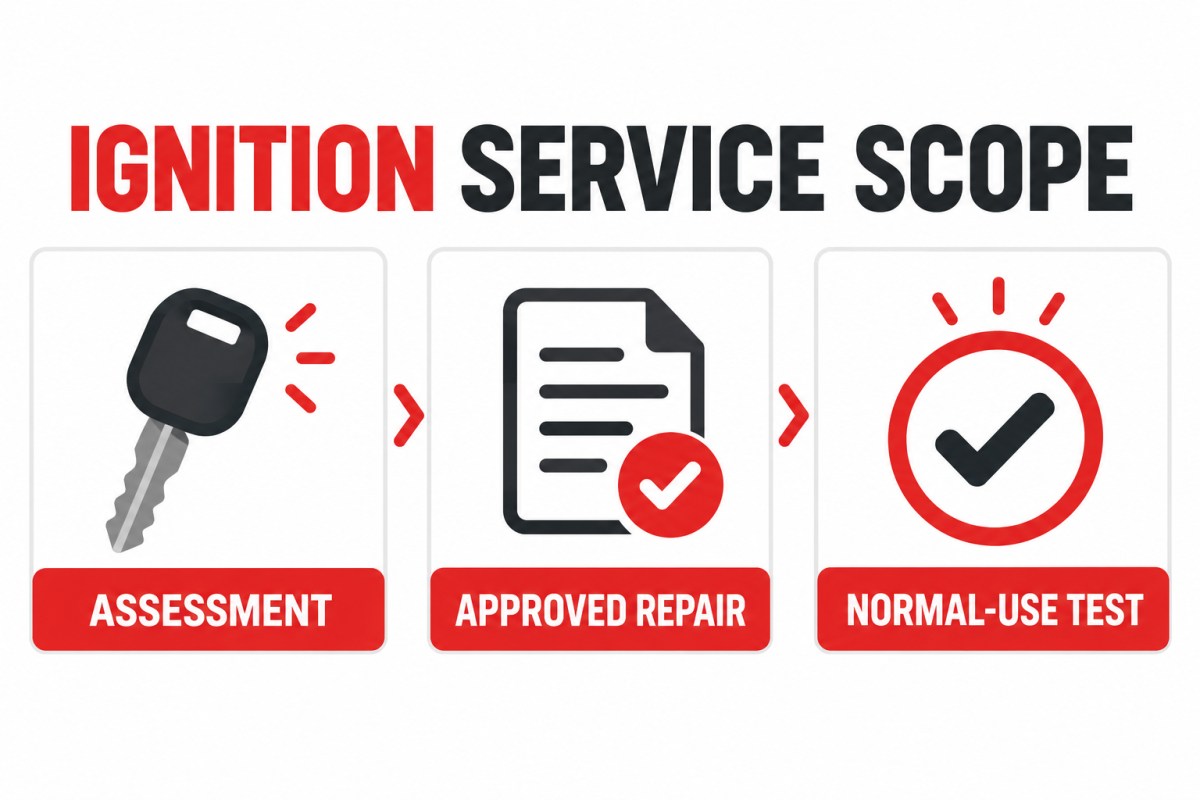
Make the handover match normal use
Ask the provider to identify what was inspected and what changed. The completion record should describe the functions included rather than simply state that the key came out. If another system needs assessment or a separate facility is recommended, have that limitation and next step recorded so the original complaint does not become an unexplained closed item.
Discuss the agreed normal-use test and follow the instructions appropriate to the vehicle and its present condition. Confirm which key is being tested. Ask about remaining resistance, repeated attempts, or incomplete operation instead of accepting an undocumented technique as the new normal. Keep the test within the approved scope and do not operate an unsafe vehicle just to demonstrate a result.
If a key stuck in ignition recurs, use the service record when reporting it. Describe whether the same sequence and control behavior are involved. Avoid introducing new experiments or changing unrelated parts before discussing the recurrence. A factual comparison gives the next assessment a clearer starting point than a new list of guessed causes.
Keep another authorized driver informed about unresolved behavior. Share the practical service result and follow-up requirements without publishing vehicle identification documents or access credentials. Retain the record and product information where the authorized owner can find them. A useful handover supports the next decision if the complaint returns.
Finally, keep spare-key planning separate from the diagnosis. Another key may be appropriate for everyday preparedness, but it does not prove that the reported retention problem has been repaired. The completed decision should be based on the vehicle-specific assessment and the normal functions demonstrated, with any remaining uncertainty stated plainly.
Frequently Asked Questions
Is a key stuck in ignition the same as one that will not turn?No. Explain whether the key rotates, starts the engine, reaches the normal shutdown position, or remains trapped afterward. Those details help separate retention from rotation and starting issues. Avoid requesting a particular replacement part before a provider has assessed the actual behavior and the vehicle involved. |
Can I pull the key out with pliers?Do not use tools to increase pulling or twisting force. The key or ignition components can be damaged, and an intact retained key can become a broken fragment. Secure the vehicle, preserve the present condition, and describe the symptom so the appropriate assessment can be arranged. |
Does selecting Park always release a stuck key?No universal statement fits every vehicle. Some models link ordinary removal to transmission position, but a retained key can have other contributing conditions. Follow the correct owner manual and stop if normal operation fails. Do not force the selector or use an undocumented interlock release as a general fix. |
Should I remove the steering-column cover?No disassembly is needed to collect the observations described here. Leave covers and associated components in place for a qualified technician. The area may contain electrical, security, and safety equipment. Share visible product or vehicle information instead of taking parts apart to search for a release. |
What if a key stuck in ignition releases after several attempts?Report the repeated attempts and any unusual force needed rather than treating release as proof of repair. Intermittent retention can still matter before the next trip. Ask the provider whether assessment should continue, and avoid telling another driver to repeat a forceful workaround as routine operation. |
Can a locksmith diagnose every cause of key retention?Coverage depends on the vehicle, equipment, parts, and the nature of the problem. Give exact vehicle details and confirm which work the provider can perform. If another vehicle system contributes to retention, a different specialist or repair facility may be needed alongside or instead of ignition-cylinder service. |
Will I need a completely new remote?Not necessarily. A retained mechanical key does not alone establish a need to replace all remote functions. Ask the provider to distinguish the key blade, cylinder, and any electronic authorization requirements. If replacement equipment is recommended, request an explanation of compatibility and what will remain usable. |
What if the engine is still running?Tell the provider immediately and follow the vehicle manual for safe operation and shutdown. Do not leave a running vehicle unattended or attempt repair while driving. If you are in an unsafe location or there is immediate danger, contact the appropriate emergency assistance rather than continuing an ordinary troubleshooting sequence. |
Should I spray lubricant into the ignition?Do not use an unidentified product or assume household sprays are appropriate for the assembly. Maintenance requirements vary and a retained key does not prove lubrication is the issue. Ask for guidance specific to the vehicle and describe anything already applied so the technician can consider it during assessment. |
What should be tested after ignition work?Ask for verification of the functions included in the agreed scope, such as starting, normal shutdown, and ordinary key removal. Confirm which keys are intended for the completed arrangement and whether any symptom remains. Keep the service record and report intermittent behavior with the conditions in which it recurs. |
Final Thoughts
A key stuck in ignition needs a precise symptom report and the correct vehicle procedure. Stop forceful pulling, secure the car, and confirm the assessment scope before approving ignition or replacement-key work.
Call Tucson Locksmith Experts LLC at (520) 595-5533 or contact the team to confirm the service scope, product support, and current availability.